

The MacNeils of Barra claim descent from a prince of the O’Neill dynasty, Ánrothán Ua Néill, son of Áed, son of Flaithbertach Ua Néill, King of Ailech and Cenél nEógain, died 1036. Anrothan emigrated to Scotland in the 11th century. Through him the MacNeils of Barra also naturally claim descent from the legendary Niall of the Nine Hostages. Anrothan is claimed as ancestor of several clans in the Argyll vicinity: Clan Lamont, Clan Maclachlan, Clan MacEwen of Otter, and also the Irish Sweeneys (MacSween). If the MacNeils are indeed connected to Anrothan, then they appear to have been a junior branch of the family and were certainly overshadowed in the 13th century by the MacSweens, Lamonts and descendants of Gilchrist. An opposing theory, proposed by Nicholas Maclean Bristol, is that there is reason to believe that they descend from Neill Maclean who appears on Exchequer Rolls at a time when Tarbert Castle was being rebuilt by Robert the Bruce. The earliest contemporary record of the Macneils of Barra is only in 1427, when Gilleonan Macneil received a charter of Barra and Boisdale.
The 18th and 19th century saw severe hardship to Clan Macneil clansfolk. During this era there was mass emigration from Barra to Canada, Australia, New Zealand, and the United States. During the chiefship of Colonel Roderick (c.1755–1822) Barra suffered its first mass emigrations, ironically the chief described himself as a melieuratier (an “improver”). One mass exodus of Barra folk was led by Gilleonan, elder son of the chief. This consisted of 370 Catholic Barra folk (about 75 families in total) who emigrated in August to Pictou, Nova Scotia. In 1838 after going broke, Colonel Roderick’s son and heir, Lieutenant General Roderick Macneil of Barra, sold Barra to Colonel Gordon of Cluny. When Roderick died in 1863 the chiefship passed to a cousin (descendant of Gilleonan) who had emigrated during the mass emigrations to Canada in 1802.
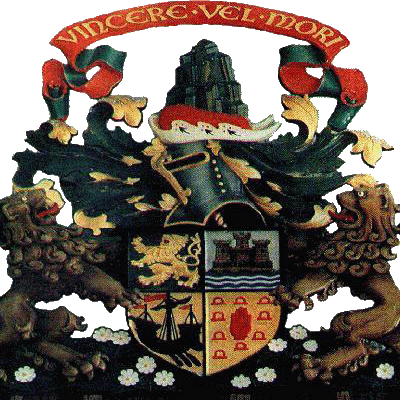
Though not a clan in its own right, MacNeil(l)s who consider themselves of the Colonsay “branch” have used the following crest badge to distinguish themselves from the Barra “branch”. This crest badge contains the crest: an armoured dexter arm with dagger; and the motto: vincere aut mori, which translates from Latin as “conquer or die”.
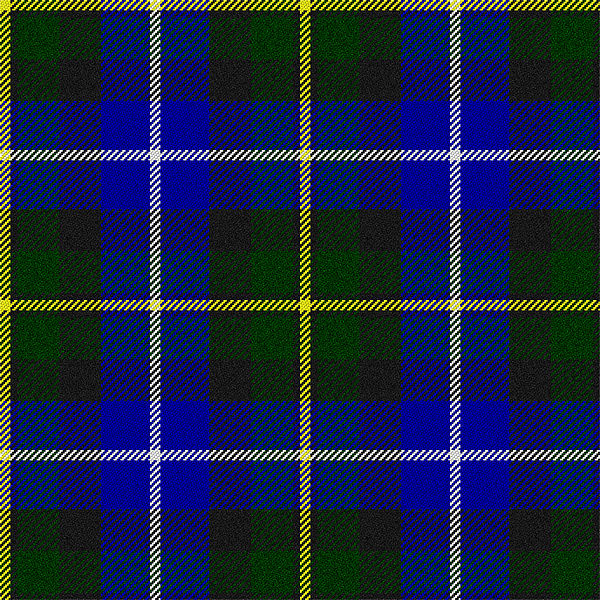
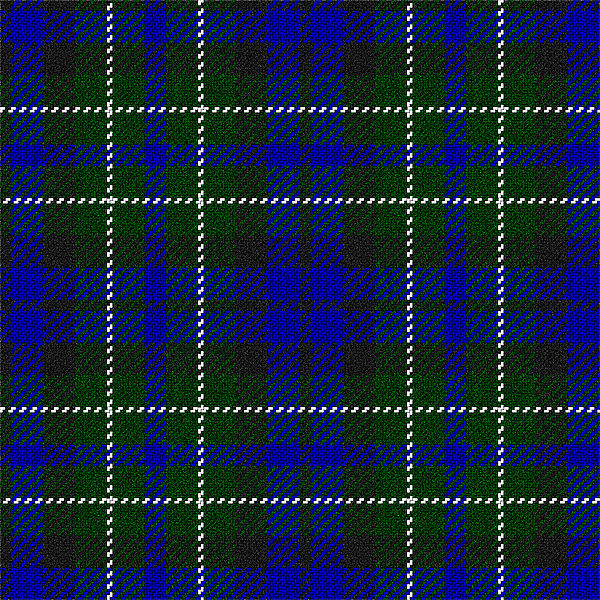
There have been several tartans associated with the name MacNeil / MacNeill. However, in 1997 the chief of Clan Macneil directed members of the clan that there were only two tartans that he recognised as “clan tartans”. These were: Macneil of Barra and Macneil of Colonsay. The Macneil of Barra tartan has been the standard Macneil of Barra tartan for over a century.


Leave a comment