

Note: Stories told to me by my grandfather, my mother, my uncle Russel Yardley, Florence Joseph, Leonard Evans and others I have asked to clarify statements.
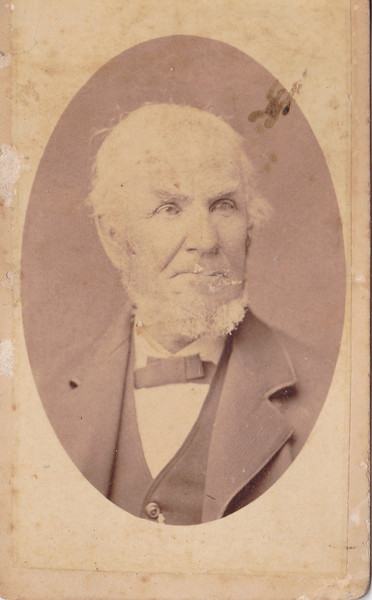
Thomas Yardley was born May 24, 1848 in Lancashire, England. His parents were William Yardley and Sarah Marsden, sister to William Marsden, who raised Thomas Yardley. His father, William Yardley was born at Old Hollows, Lambard St., England. His mother, Sarah Marsden Yardley, was born in Towleich, Oldham Lancashire, England. William Marsden with his family, his sister Sarah Marsden Yardley, her husband William Yardley and Thomas, age three, crossed the water in 1851 arriving in Upper Alton, Illinois. This same year his father William Yardley took sick with Cholera and died July 6th 1851 in St. Louis, Missouri. The following October his mother had congestive chills and died October 11, 1851 in Upper Alton Illinois.
Thomas Yardley was now left an orphan, age three. April 29th 1855 William Marsden together with his family and little Tommy left Illinois for Utah.
They had many hardships crossing the plains. One night as they were camped in their wagons in a circle as was the usual way, the Indians came upon them, demanding drinking water. The only water they could get was to dig a surface well. As the well was too small for a man to get down in it, his Uncle William Marsden put little Tommy down the well to dip water for the Indians. He was very frightened and thought every time he looked up to hand the water out, he would be hit with the ugly old Indian’s Tomahawk. He was so exhausted and tired it made him sick. He couldn’t sleep that night, and he was sick for a week after that.
They arrived in Utah September 3, 1855; in Salt Lake September 7. They made their way down to Provo, stayed there awhile and then down to Parowan, arriving at Parowan in 1861. Here his Uncle William Marsden built a home, (the old Tom Benson home, that still stands). At the present Lime it is occupied by Lucious Benson family, a grandson of William Marsden.
Grandpa, being an orphan, was treated and lived as such. Hardships and difficulties never ceased for him, although this new home in Parowan with his Uncle was a happy home for grandpa, as he Loved his Uncle William and family very much. They were the only family of brothers and sisters he had, and of course his Uncle William was the only Father he knew.
His Uncle William Marsden was a very proud man. He ran a store and always had occasion to be dressed up, wearing a stiff front white shirt, a stove pipe hat, a swallow tailed coat, and always carried a cane. (I guess he was a typical Englishman.) Grandpa never remembered him being dressed in working clothes.
Happy as grandpa was, hardships never ceased. I have heard him tell me how he used to gather the winters wood for the family. Having no shoes for the winter weather he would wrap his feet up in gunny sacks and go barefooted in the summer time. When he became old enough to get a job, he went to work for Ebeneezar Hanks as a carpenter in a cotton mill. He made very good at this, and with his earnings and savings, fitted himself out with clothing and his first pair of shoes, besides helping to support, the family. He was very successful in getting jobs. It was said of him he could do most anything he worked at.
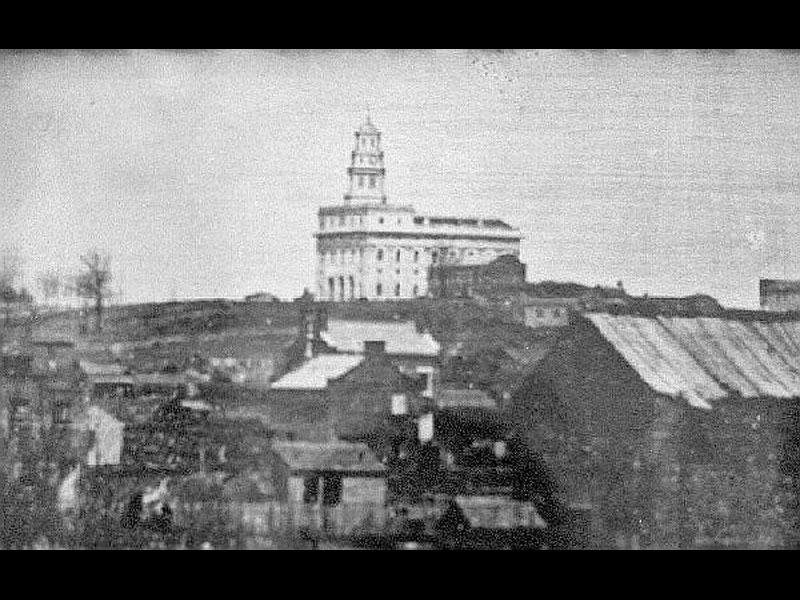 When a young man, on June 5, 1886, he left Iron County to journey back to Oquawka (Nauvoo), Illinois to assist more saints in coming to Utah. On this trip he brought back with him all kinds of seeds. Among them were flower and vegetable seeds, and water cress seeds which he took aroundt all the springs he could find in all the surrounding towns, namely Paragonah, Cedar City, Parowan, Beaver, Minersville and Milford and planted them in the springs. Therefore the first water cress was introduced into this county.
Grandpa was a very ambitious, charming young man. After working a few years he took up a Lot across the street north form his Uncle’s home, and there built a nice home of his own, and built it by himself.
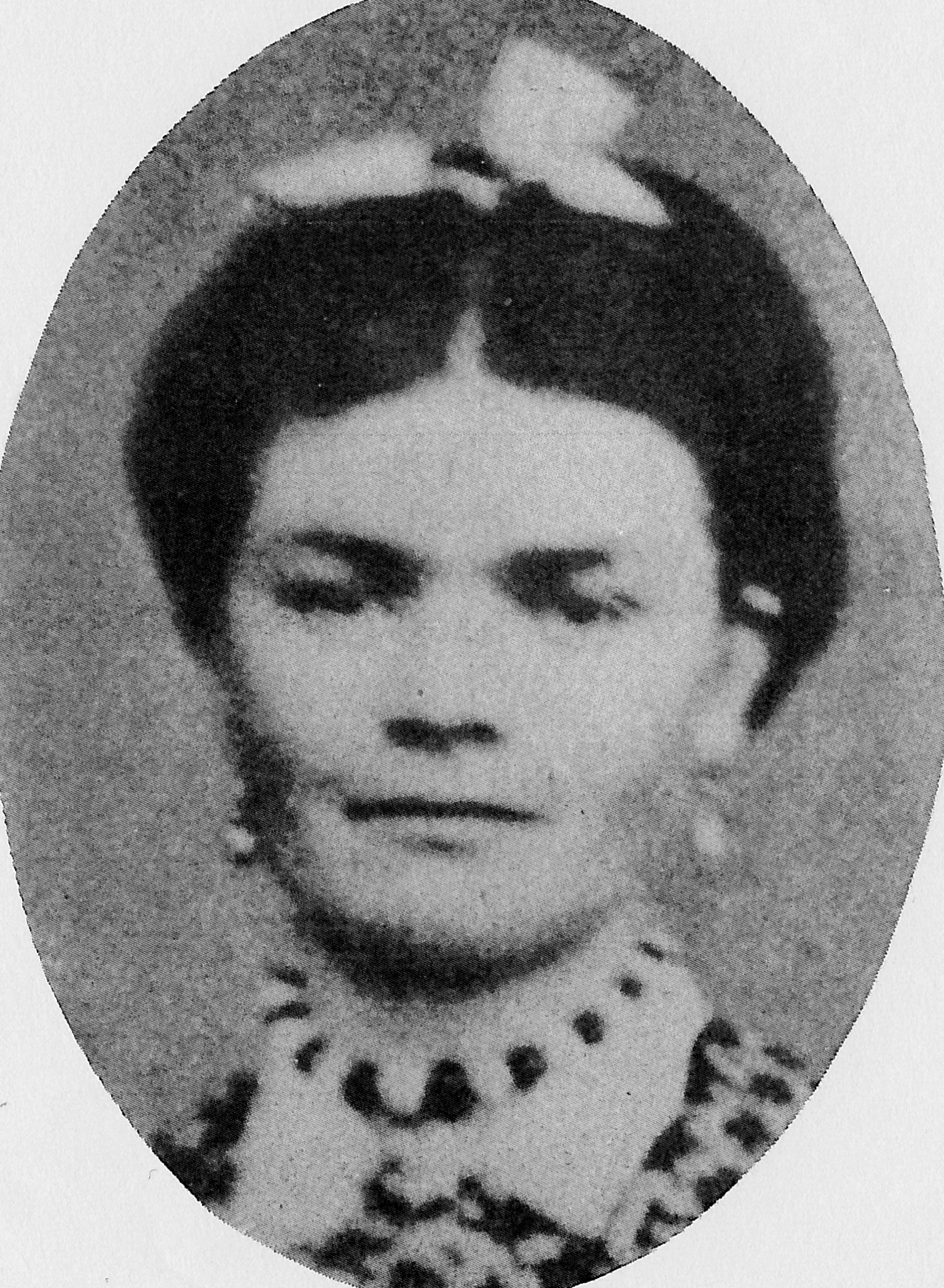
Soon there came to Parowan a lovely young girl from Ogden who had come to visitwith her uncle Amos Worden who lived in Parowan and ran a factory, where the Presbyterian Church used to stand. At the present time John Rasmussen has a home and a blacksmith shop there. Grandpa met and courted this beautiful Joanna Isabell Keyes. In the fall of 1870 together they journeyed in a covered wagon to Salt Lake City where they received their endowments and were married in the Endowment House. This was before the temple was built. This journey took them one month. When they arrived back, their nice new furnished home was awaiting them.
They soon made this a real home by planting trees – an orchard of fruit trees and Mulberry trees for shade. Many times I have had my fill of these large juicy mulberries and climbed to the top of this monstrous tree. These were the first trees to be planted in Parowan. He also had the first lawns and flowers. People used to come from all over town to get seeds from his beautiful flowers.
After their marriage he built a grocery store and ran it very successfully for some time. His uncle-e was a liquor inspector and wanted Tommy to turn his store into a liquor store. He did as his uncle wished. At this time the laws were very strict. Liquor stores had to be closed at 9 p.m. one evening three large fellows came in for a drink. They were determined to stay and carouse around all night. Grandpa told them it was time to close the store, and they would have to leave. They still remained. Grandpa with his quick thinking and acting, quietly reached up to the lamp on the wall, turned it, down low at the same time reaching in a drawer for an old rusty pistol, pointed it at them, and told them to clear out. They cleared out and never came back again. This was a very good turning point in grandpas’ life. He said then that this business was not the right thing to do, especially while raising a family.
He then turned his liquor store into a blacksmith shop – the first one in Parowan. He was very skillful and successful in blacksmith work. One day a band of United States Soldiers came to Parowan with twelve span, or 24 mules. They had to have them shod that day to continue on their journey to California. Hearing that, Thomas Yardley (grandpa) was an expert in his work, asked him if he could shoe their mules in one day. He did so. As mules are much harder to shoe than horses, he put in the most, strenuous day of his life. The soldiers praised him highly for his work and paid 25c a shoe or $1.00 per mule, then went on their way.
This was another turning point in his life. He was so very ambitious he wanted to do something else, and make a better living for his family, so he homesteaded a farm of 160 acres just west of the North Field in Parowan. He was the first in Parowan to homestead land or a farm. They sold their lovely home in town to Jenkin Evans. This home later became the first, hotel in Parowan. They lived in a little log house he had built on the farm. He lived here for two years working and improving the place. He built a very substantial cellar and milk house, also a blacksmith shop where he made all his tools he used to work on the farm with. He made his wagons and a buggy.
He built a most unusual barn, a very large one. He could drive in it with a load of hay, unload it, turn around and drive out. In each of the four corners there were pens made for the various animals and one for machinery. It was very unique and convenient especially in the winter time. He could go to the barn and there was everything under shelter – cattle, sheep, tools, hay and all. This barn was built in such a way there was no need for studding to hold the roof up. It is still standing on the farm now owned by Leonard Evans.
Grandpa dug a well on the farm. It was 95 feet deep, 10 feet in diameter at the top and 5 feet at the bottom. He struck sand and gravel at the bottom, so he built a round frame work out of 2 by 4’s reinforced with heavy iron bands, which he hammered or drove down the well as he worked and dug it out. It had a windlass on the top tower to raise the bucket. It was well braced.
The first year grandpa really farmed on their homestead farm. He raised 300 bushels of corn, shucked and shelled it by hand. He made a little hand sheller that would chop the butt of the corn off, the cob would fall off the shucks. The chickens would scratch in the shucks and lay good all winter without any more feed. When the family had lived in the log house about two years, grandpa began building a new home. He hired Herb Hyatt and his brother Am Hyatt to help him make adobes. Then he built the second new home which was a very substantial building. It was made of extra-large adobes. All walls inside and out were two adobes thick. The windows and door frames were extra strong. Again grandpa built this second new home by himself. It, consisted of four large rooms 3 stairway leading up to two large rooms upstairs – one for the girls and one for the boys. It was a wonderful substantial house for being built in those days.
This was a real home where a large wonderful family of eleven children was reared. They lost two babies, one 15 months of age and one four months, the first and the tenth child. This was a wonderful home shared by all in happiness and sorrow.
Grandma died February 19, 1892 leaving a young baby for the family to raise. At this time there were many troubles and responsibilities heaped upon them. At the time of grandmothers’ death, grandfather was very sick with pneumonia. He was in bed 48 days. Four of the children were sick with measles. The oldest boy had his foot crushed. That winter was a struggle for them. Living on a farm they didn’t have much help. This left mother and her older sister to do and care for the family. Mother said through all their troubles they had many blessings to be thankful for.
Grandpa became discouraged and discontented. He didn’t stay on the farm many years. He bought his first home back again from Jenkin Evans and moved back to town. He added on and built more rooms to the nice home, and ran a Hotel for years. This was the .
It seems that grandpa was to have more sorrow and disappointments. The oldest daughter Tessa was married February 21, 1894, to James E. Goff. One child, Violet, was born to them. One night grandpa had a dream, as he interpreted it, a bad one. He knew that his daughter had not long to live. He jumped out of bed, dressed, and started walking for Minersville. By cutting through the west hills he reached there a little sooner, and was able to see her before she died November 13, 1896, the same year I was born and the year Utah was made a state.
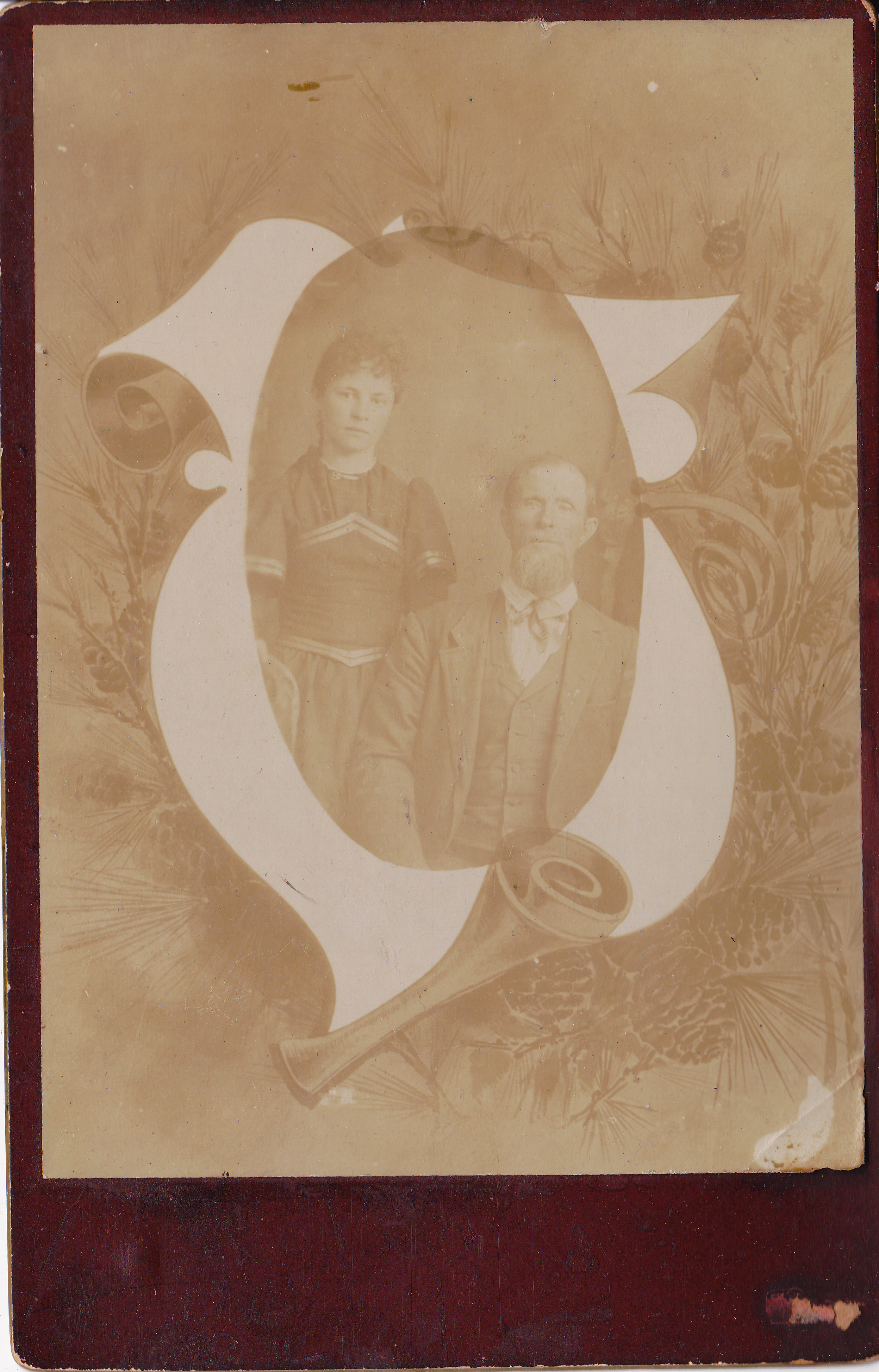
The marriage and death of her older sister had left mother to care for the family, then mother was married in 1895. That left the responsibility on the three younger girls. The family was attending the Fourth of July Celebration when Sarah, the youngest girl, became very ill. Grandpa had to take her home” She died the following day July 5, 1899, at the age of 16 of what we now call appendicitis.
Now the family was down to grandpa, the two girls, Celia and Etta, two boys, Leslie and Russel. I was old enough then to stay at the hotel with them. I was there so much of the time that Aunt Celia and Aunt Etta were both just another mother to me, and grandpa was just like a father to men I well remember when Mr. Culver first came to Utah. He stayed at the hotel. Then he made his trips more often, and always had a choice room. He courted and married Aunt Celia October 2, 1907 at Provo, Salt Lake County, Utah. Aunt Etta was now left to care for grandpa and the boys.
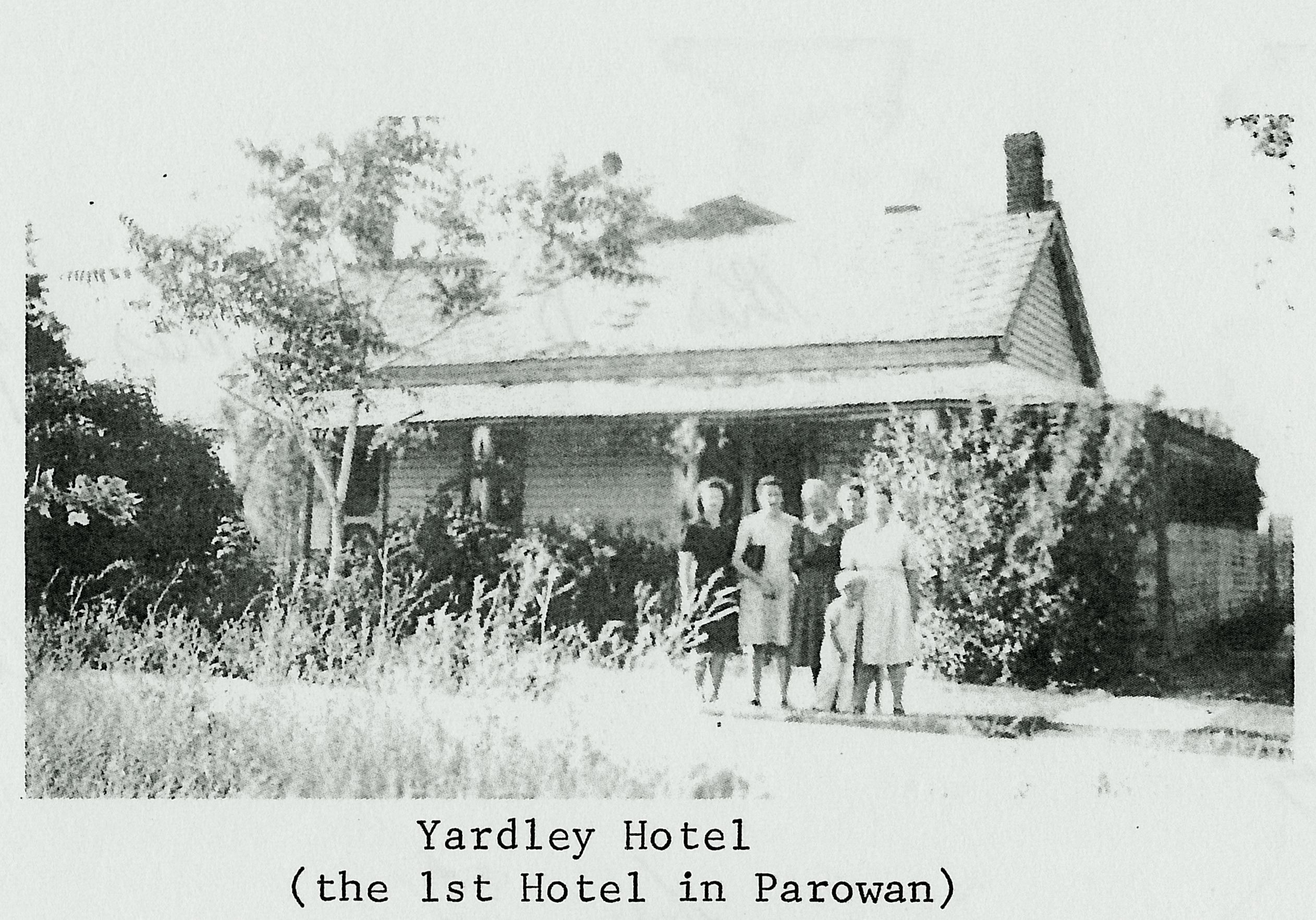
We all loved the hotel and loved to go to grandpa’s place very much, but as time went on he became very discouraged and discontented. When Mother and Father started to ranch on the mammoth, of course I went with them, but was always glad to get back to grandpa. One day when Father came up from town he brought the news that grandpa had sold the hotel to Hans J. Mortensen and had got a place and moved out to Buck Horn. I was broken hearted over this. I cried all night. I just couldn’t see why they would do this when I wasn’t t there. Mother was so broken up too. There were so many things they could have given her instead of giving them all away and getting nothing out of them.
When we returned from the ranch, they came in from Buck Horn and took me back with them in the wagon. I stayed with them most of the time until Aunt Etta became discouraged and went up to Provo to work. That same summer our adobe house fell in and we had to move down on Mr. Culvers farm. Again Grandpa sold his home, had nowhere to go, so cleaned out the old adobe in our house, the logs were still standing on the side where the adobes fell, and fixed it up. It made a real good home for grandpa and the boys. He was not contented there for long. He soon went to Provo where Aunt Etta was, bought or took up a farm on Provo Bench, bought a home in town. I lived with them again in Provo. Grandpa came down to get me. I stayed until Aunt Etta left again and went to California.
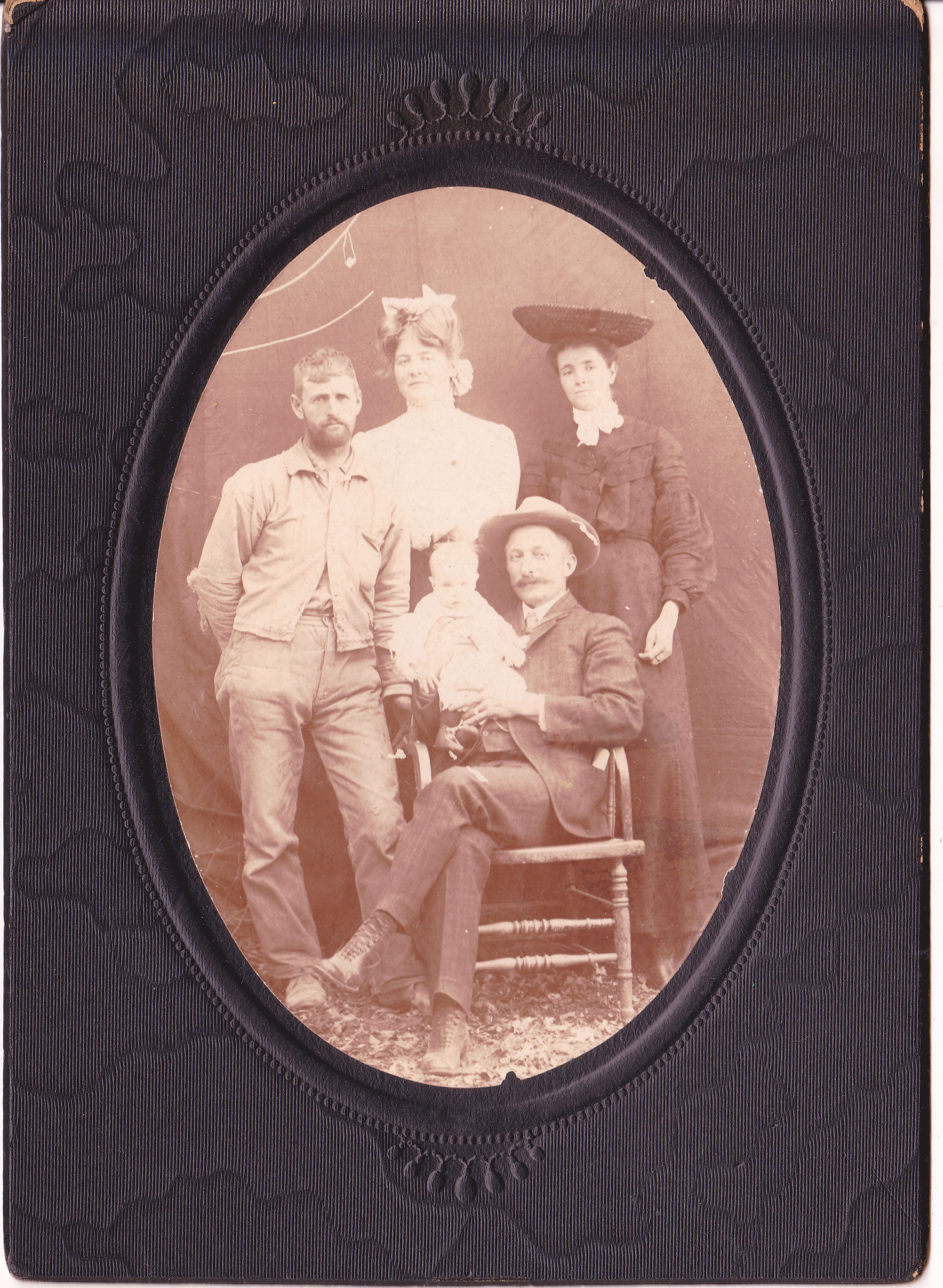
Russel was married and living on Mr. Culver’s Farm, but the three of them bought a farm in Gunnison and lived there. One day while they were all working in the field Grandpa suddenly dropped to the ground. His leg had given away with him. Gangrene had set in. They rushed him to the hospital in Salina where he later died June 28, 1921. Aunt Etta married in California. Leslie went to live with her. He died February 11, 1932.
Grandpa was a wonderful man. He was Jack-of-all-trades and MASTER OF THEM ALL. I don’t know of anything he couldn’t do that he tried. His trades were: Farmer, blacksmith, carpenter, mechanic, brick layer, stock raiser. He introduced the first pure bred cattle inLo this country. As a boy he helped build the old Rock Church in Parowan. He built and helped to build many homes in Parowan.
He was one of the men to help guard the Indians in Parowan.
He had many colonies of bees. He started the first fruit orchards, lawns, and flowers in Parowan, and brought water cress to this county.
Grandpa made all his tools he used on the farm, his plows etc. and built his owl wagons and a buggy.
On June 21, 1956, Father, Mother, Owen, Ada and myself were invited down to Lois’s to a birthday dinner. We decided to go around by the old farm where grandpa built these very skillful and most wonderful structures of their kind in these days. It was very interesting to note the plan and the sturdy door and window frames of this wonderful home. As we stood there inside we listened to some very pathetic stories of Father and Mother, of the good times and some not so good, that they had at this home. It seemed as though we were living their lives with them. Mother showed us where the different pictures hung on the wall, the room she slept in upstairs, (one room for the girls and one for the boys) very large rooms. She showed us where Grandma Yardley’s bed stood and where she died.
As we stood in the kitchen by the west window Papa showed us where the horse ran away with him. He had been invited down to Aunt Tessa’s birthday and was leaving to go on the sheep herd when the horse was scared and started to run. Mother and the folks stood helplessly watching on till he was out of sight.
We then went out. to see the most unusual barn and how it was built with no studding to hold the roof up, and such a large barn and large pens in each corner. I have been there several times since, once with Marie and Helen Smith and LaNell.
The first trip I had to Salt Lake Grandpa took me on the train. I was nine years of age I remember when we reached Salt Lake. We went in the depot, he set the suitcases down not far from the ticket office and told me to stay right there by them until he came back. He had to go to the ticket office for something. I heard the train coming. Of course I had to run to the door to see the train. It was so wonderful to see the train and be on one.’, When he came back I was gone. Grandpa was very frightened so he contacted a policeman standing nearby, started searching for me. In a few minutes they came’ back inside to look again. I was standing right by the suit cases.
When I lived in Provo with them he also took me on another trip to Salt Lake, (my second trip) to SaIt Lake we went in the wagon from Provo, camped in Springville, stayed at Uncle Ervin Yardley’s place out on 32 South State.
While I was still in Provo with them, grandpa took me to the Black Hawk Reunion. In Springville, we stayed with his cousin, Mrs. Silvia Rollance and her husband Jewl Rollance. I will never forget the sham battles we saw out on Springville hills; he was a Veteran of the Black Hawk War. At this reunion I saw them pin the badge or the seven veterans left of the war.
From LaNell Topham’s history that Grandma Stevens (Alice M,) wrote for him, Grandpas’ family moved out to the farm March 4, 1889. The day Benjamin Harrison took his seat.
They moved in their new home on the farm in 1891. Russel was three months old when his mother died. Momma (Alice) was mother to him.
When Grandpa was guarding Indians, he had a hole shot through to his hat.
Grandpa was a very good nurse not only at home but he used to go night after night to sit up with the sick. People would come to ask him what to do for the sick.
At one time Aunt Celia became very ill. Grandpa was very worried. He sent for the Doctor, Doctors were just beginning to practice then. The Doctor said he thought she was coming down with Typhoid Fever, keep her in bed three days and it will develop by then. I will be back to see her. Grandpa rushed to the kitchen, started preparing home remedies and when the Doctor came back in three days, Aunt Celia was up and around and very well.
All these things proved the wonderful courage and skill grandpa had.
Great grandmother Yardley was baptized in Manchester England by, a Methodist minister named James Mahon and confirmed the same day by, Orson Pratt and Brigham Young. William Yardley was baptized November 22, 1705, named in his grandmothers will, Mary Wright
I am thankful to be able to relate some things about this wonderful man. I am also thankful to have had the opportunity of going to Missouri and Nauvoo the beautiful where he came from and to stand on the beautiful banks of the Mississippi River where the noble pioneers crossed to come to Utah.


Leave a comment